Thomas Humphrey
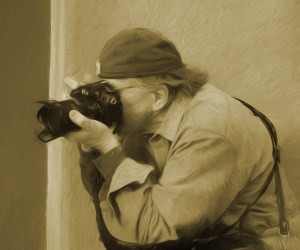
I have been making photographs for nine years. During the first two years I was living in California and I had a full-time rather demanding job so maybe that was just a warm-up period. For the last seven years I have been retired and contentedly living in San Miguel spending more time with photography.
I knew that I had found my niche in photography when I read a quote from Ansel Adams: “You don’t take a photograph, you make it.” Ansel Adams manipulated his film photos extensively, adjusting exposure and contrast using techniques in the darkroom. Today photographers make similar adjustments with PhotoShop but we have way more control than just exposure and contrast.
For me, an image made by my camera is usually way too “busy”, full of many elements vying for the attention of the viewer, you know, like real life. I don’t want to record real life. I want to create my own world. By cropping, removing distracting (to me) elements and overlaying images I can morph the raw photo from the real world to my world, a world that is more aesthetically and technically focused . Of course, not all photographers want to do what I want to do. That is why I was so pleased to discover the Ansel Adams quote. It epitomizes my niche.
Painters start with a blank canvas and affix elements to synergize their visions. Photographers like me carve out a chunk of reality with our cameras and then manipulate it to create our reality, a reality born from the original image but not identical. The making of a photo can require only a few decisions or a multitude. It is common that the process encompasses (even requires!) many dead ends. It is as much about deciding what not to do as about deciding what to do. Sometimes the manipulation is modest e.g. cropping and contrast; sometimes it is extensive. At times it seems to require almost no effort. At other times it resembles painstaking sculpting. No matter. In the end it is mine.
I love the feel of my camera in my hands and I love the sound of the shutter release
I try to not look for . . . but to respond
I respond to shapes, not objects
And, then again . . .
I respond to objects, not shapes
I am inspired by painting
 Thomas Humphrey Photography
You must be logged in to post a comment.